For most people, yes, you can take iron and magnesium together. The dose and what else you're taking your iron with might matter more than whether you’re taking those two pills at once.
From split doses and phone alarms to meticulously timing food and supplements all day, the “right” windows make life really challenging. The reality is that you can probably relax a little with iron and magnesium at least.
From my POV as a registered dietitian, I’ll cover when spacing them out could be worth it, tips to help with iron absorption, and what the research shows.
Key Takeaways
- For most people, you can take iron and magnesium together. At multivitamin-level doses, you shouldn’t need to worry about timing it right.
- At very high doses, you could consider spacing iron and magnesium out by 2 hours. However, there’s thin evidence around these two competing for absorption.
- What you take iron with might matter more than the timing. Vitamin C can help absorption, while coffee, tea, and calcium may hurt.
- Always follow the instructions on the label and guidance from your doctor. Check with your provider before you start or change iron supplementation.
As always, consult with your healthcare provider before starting any new supplement or nutrition program, especially if you are pregnant, nursing, taking medication, or have a medical condition.
What’s In This Guide:
- Can You Take Iron and Magnesium Together?
- Do Iron and Magnesium Actually Compete?
- How to Space Iron and Magnesium
- What Actually Affects Iron Absorption
- How Multivitamins Handle Mineral Interactions
- Should You Even Be Taking Iron?
Can You Take Iron and Magnesium Together?
For most people taking normal amounts, the two can be taken at the same time without issues. At higher doses, you could consider spacing them apart ~2 hours.
The short answer
You should be able to take them together at multivitamin-level doses. If you’re taking way higher doses than 100% of the Daily Value (DV), consider separating iron and magnesium.
There are specific minerals that are often recommended to be spaced apart, but there’s no hard and fast rule for iron and magnesium.
When spacing actually matters
Spacing out mineral intake could become more important at higher doses. At levels present in foods, most micronutrients aren’t vulnerable to interference. But at higher intakes, similar minerals move through less regulated pathways.
Many multivitamins for women supply around 18 mg of iron, which is 100% of the DV. However, iron-only supplements have 65 mg, which is almost four times as much iron content. That’s why dose is important in this equation.
Do Iron and Magnesium Actually Compete?
In theory, iron and magnesium could compete at higher doses, but they use different routes in the small intestine.
How mineral absorption works
Non-heme iron is the supplemental and plant-based form. It enters your intestinal cells to be absorbed through a transporter called DMT1. Other minerals can use this same pathway.
Magnesium uses a different path. Most of it moves passively between intestinal cells, with some transported through TRPM6 and TRPM7.
So these two minerals largely travel different routes.
Why the dose changes the picture
If you push the doses high enough, less-regulated passive uptake can take over, and minerals with similar chemistry can start to interfere.
However, iron’s known interactions are with calcium, zinc, and copper. You can’t just assume the same findings apply to magnesium. Magnesium isn’t among the major ones called out.
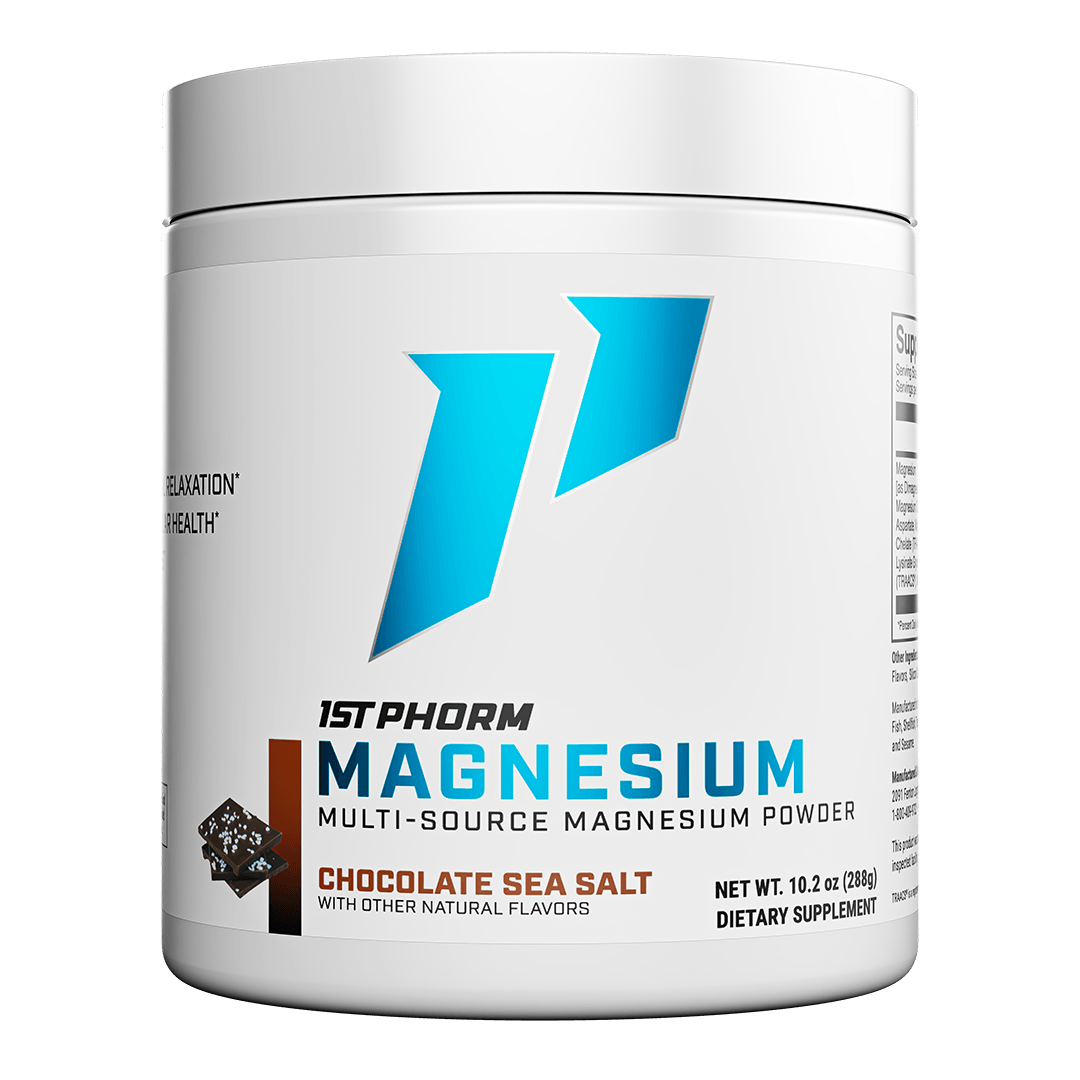
To learn more about magnesium, check out 1st Phorm’s guide to choosing a magnesium supplement for a deeper look at forms, dosages, and more.
How to Space Iron and Magnesium
If you want to space these two minerals apart, the “2-hour rule” is common guidance, although not necessary in all cases.
The “two-hour rule”
Two hours is roughly enough time for the first mineral to clear its primary absorption window in the small intestine, so the second one isn't arriving into competition. This rule comes from pharmacy best practices for keeping minerals away from drugs and from each other.
I would treat it as a sensible default rather than a hard rule or some finding from a dedicated iron and magnesium interaction study.
A simple daily schedule
If you’re taking a higher dose of iron and a separate magnesium, here’s a sample schedule that could work for you:
- 7:00 AM (or when you wake up): If you’re a coffee drinker, drink it early before you take your iron.
- 8:00 AM: Take iron with breakfast, including a vitamin C source that helps with absorption, like orange slices.
- 10:00 AM or later: Take your magnesium at least 2 hours after iron, or save it for dinner or bedtime.
Follow the instructions on the label since forms and labels may vary. Read up on the best time of day to take your vitamins for more information on timing.
When you don’t need to bother
If you get your iron from a daily multivitamin and aren’t taking a high-dose single-ingredient iron supplement, you’re probably fine without following a hard 2-hour rule.
Take it whenever you’ll remember, with or without magnesium.
What Actually Affects Iron Absorption
Vitamin C helps with absorption, while coffee, tea, calcium, and dairy work against it.
|
Helps iron absorption |
Hurts iron absorption |
|
Vitamin C (citrus, peppers, strawberries) |
Coffee and tea (polyphenols) |
|
Meat, fish, poultry (heme iron sources) |
Calcium supplements and dairy |
|
Taking iron on an empty stomach (absorbs better, though often tolerated worse) |
Taking iron alongside a calcium-rich meal |
Vitamin C helps
Vitamin C can improve the bioavailability of iron. Even in vegetarian diets with non-heme iron, ascorbic acid (a form of vitamin C) can optimize absorption of iron.
Coffee, tea, and calcium hurt
Coffee and tea contain polyphenols. These compounds can inhibit your iron absorption.
Calcium can affect nonheme and heme iron absorption, so having milk or dairy products is something to watch when taking your iron. These effects show up most clearly in single-meal studies. Across a varied day of eating, the impact of any one component tends to be more modest.
Heme vs. non-heme iron
Heme iron comes from meat and seafood. It absorbs well and is less affected by what you eat with it.
Non-heme iron is the form in supplements and plant foods. It’s more sensitive, and factors I’ve discussed above apply.
Food vs. empty stomach
Do what works for you and your tolerance. Iron is typically better tolerated with food. If an empty stomach works best for you, do that.
If not, consider pairing it with food and add a source of vitamin C. See whether to take supplements with food for the broader question.
How Multivitamins Handle Mineral Interactions
Thoughtfully designed multivitamins consider mineral interactions by choosing forms and ratios that work best.
Why formulation matters
Interaction risk can be higher when minerals are taken as isolated supplements at high concentrations.
So if you’re taking your own stack with single-ingredient supplements at high doses, you may want to check and see if interaction might be an issue. A specially formulated multivitamin is typically built to address that constraint.
What to look for on a label
Look for reasonable doses that are closer to DVs than extreme megadoses, and ideally a formula that’s built around addressing any interactions.
I really like Micro Factor because it’s a complete daily pack, with iron included, that’s thoughtfully designed with forms and ratios that work synergistically.* It’s a straightforward option for those who don’t want to have to try to “time it” correctly with a complicated stack.
Should You Even Be Taking Iron?
Taking iron isn’t like taking a water-soluble vitamin where excess just comes out in urine. It’s important to be intentional about supplementation.
Why iron is different
Many nutrients that you take too much of just pass through your system. Iron’s different since there’s no mechanism for excretion.
Iron's balance is regulated by absorption alone, so once your body absorbs iron, most of it stays put. It's the reason iron is worth being deliberate about rather than adding to your routine on a hunch.
For the full picture before you start adding iron to your routine, see what to know about iron supplements. While considering iron, you may also want to read up on which vitamins matter most after 40.
When to talk to your provider
If you’re considering taking an iron supplement, talk to your healthcare provider. Especially if any of these apply to you:
- Pregnant
- Breastfeeding
- Taking medications (there could be interactions or meds that affect how much you absorb)
- Managing a health condition
- Already on an iron supplement
Frequently Asked Questions
How long should you wait between taking iron and magnesium?
Usually you don’t need to space them out. If you're taking iron with magnesium at typical multivitamin doses, take them together and don't think about it. But at higher doses, consider waiting 2 hours between taking one and then taking the other.
What should you not take with iron?
Coffee, tea, and calcium supplements may all reduce iron absorption when taken at the same time. If you want to increase bioavailability, you could pair iron with vitamin C.
Can you take iron and magnesium at night?
Yes! And many people prefer taking magnesium at night anyway. What matters more than the timing is what else is sitting in your stomach, since dairy or calcium at dinner can reduce iron absorption.
Does magnesium block iron absorption?
There’s little evidence that magnesium blocks iron absorption at normal doses. Plus,the two minerals are absorbed in different ways.. Iron has more well-documented interactions with calcium, zinc, and copper.
Is it better to take iron with food or on an empty stomach?
Iron absorbs better on an empty stomach but is usually tolerated better with food. If it bothers you or you have a sensitive stomach, consider taking it with food.
Conclusion
At lower multivitamin doses, don’t sweat it: you should be fine to take iron and magnesium together. But if either dose is higher and taken through a focused, single-ingredient bottle, you could consider spacing them out 2 hours apart.
Try to be mindful of some of the factors that also increase or decrease your iron absorption. That means moving your coffee time a bit earlier or having some fruit with your iron supplements.
If you’re looking for a daily pack that helps you avoid having to juggle multiple bottles, browse our vitamins and minerals lineup. Of course, talk to your provider before starting supplemental iron.
Have any questions in the meantime? Please don't hesitate to reach out. We have a full team of NASM Certified Personal Trainers and Nutrition Coaches right here in St. Louis, Missouri.
Just give us a call at 1-800-409-9732 or send us an email at [email protected]. We're available Monday through Friday from 6 AM to 8 PM Central and Saturday & Sunday from 9 AM to 7 PM Central.
We’re happy to help in any way we can to support your training goals!
*These statements have not been evaluated by the Food and Drug Administration. This product is not intended to diagnose, treat, cure, or prevent any disease.