A keto protein powder is keto-friendly when it contains very low or zero carbs and no added sugar. Everything else on the label that claims to support keto is usually just marketing.
What’s confusing is that keto is a high-fat diet, so people often assume that there need to be MCTs or other fats included, when they don’t. Protein supplies the protein part of the macro equation, whereas fat should come from other food sources. What you’re really looking for is a powder that doesn’t add too many carbs to your day.
From my POV as a registered dietitian, I’ll cover how protein fits into keto macros, the TL;DR on the gluconeogenesis worry, and what to look for on a label.
Key Takeaways
- A keto-friendly protein powder should contain very low or zero carbs and no added sugar. A clean whey isolate fits that bill perfectly.
- The keto diet typically requires high fat, moderate protein, and low carbs. A protein powder that’s low in carbs won’t kick most people out of ketosis.
- Check the nutrition facts and ingredient list for total carbs, added sugar, sugar alcohols, and any unnecessary fillers.
- Consider complementing a keto protein with a fat source. Powders provide protein, but aren’t going to be the best source for fat for keto diets.
As always, consult with your healthcare provider before starting any new supplement or nutrition program, especially if you are pregnant, nursing, taking medication, or have a medical condition.
What’s In This Guide:
- What Makes a Protein Powder Keto-Friendly?
- How Does Protein Fit into Keto Macros?
- Does Protein Kick You Out of Ketosis?
- Types of Protein for Low-Carb Diets
- How to Read a Label for Keto
What Makes a Protein Powder Keto-Friendly?
A keto-friendly protein powder should contain very low or zero carbs and no added sugar. One of the most keto-compatible options you can get is whey isolate.
Low or zero carb is the whole game
Keto works by keeping carbs low enough so that your body starts using fat for fuel instead of carbs. Most people achieve that by staying under ~20 to 50g of carbs per day.
So when your “carb” budget is that tight, even a standard protein shake with 8-10g can eat up the allowance unnecessarily.
Zero is ideal for a keto-friendly protein powder, but a couple grams are fine as long as you watch the rest of your diet.
No added sugar, no junk fillers
Added sugar is the fastest way to blow your carb count for the day. It can also be hidden under different names: dextrose, maltodextrin, honey, agave, cane sugar, etc. If any of those are near the top of the ingredient list, consider a different option.
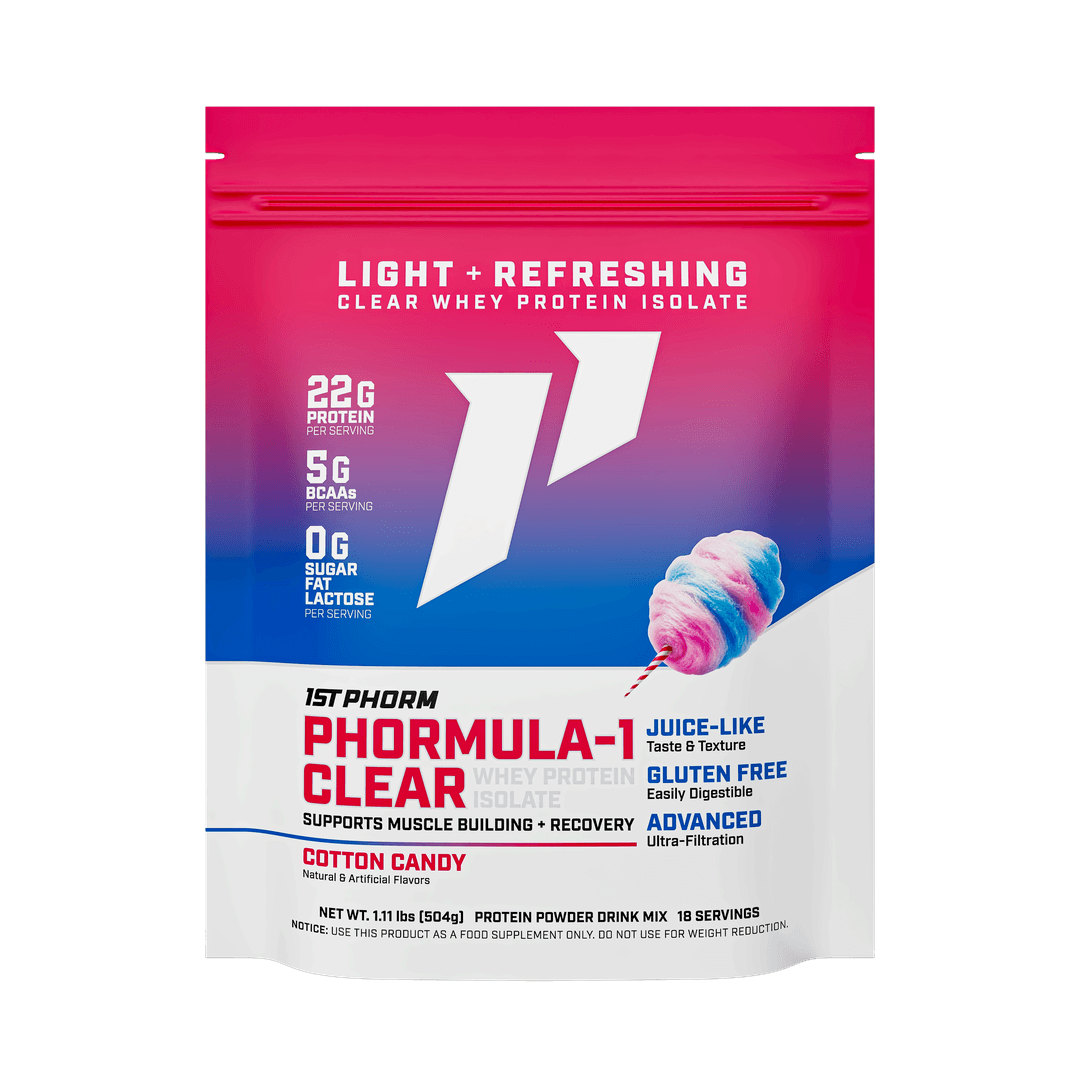
The cleanest keto powders keep it simple with no or limited carbs. A high-quality clear whey isolate like Phormula-1 Clear contains only 6 necessary ingredients with 22g of protein and 0g carbs, sugar, or fat, per scoop. That’s the kind of profile to meet strict keto macros without adding carbs to your day.
How Does Protein Fit into Keto Macros?
The keto diet consists of high fat, some protein, and very low carbs, but protein can fit into the macro mix. Carbs are really the constraint you’re watching.
The keto macro breakdown
There are different keto diets/plans out there. But most land around 70-80% calories from fat, 10-20% from protein, and 5-10% from carbs. So, for a typical 2,000-calorie diet, that’s about 165g of fat, 75g of protein, and 40g of carbs.
Notice that the protein amount is fairly substantial. Getting enough protein can help preserve lean muscle while you’re losing fat.* That’s a critical piece a lot of people miss that I try to emphasize as a Registered Dietitian.
Why carbs are the limiting factor
Fat is your fuel, so you’ll end up eating a lot of it. Protein is still important as building material for your body, so you keep it steady.
Meanwhile, carbs are the main factor that decides whether you stay in ketosis, so that’s the number you have to really focus on limiting. A zero-carb protein powder (mix in water) fits into that routine really well, so that you’re getting some protein intake without bumping up carbs.
Does Protein Kick You Out of Ketosis?
For most people, moderate protein intake shouldn’t affect their state of ketosis. The concern about gluconeogenesis is legitimate but often overstated.
The gluconeogenesis nuance
Here’s why some people are concerned: your body can turn protein into glucose through a process called gluconeogenesis. Essentially, “too much” protein intake could spike your blood sugar and end ketosis.
This is a legitimate concern, but your body tends to keep its total sugar output steady, so more protein doesn’t mean a flood of extra sugar. So, your body makes the glucose it needs and when it needs it, rather than cranking out sugar production every time protein shows up.
What evidence suggests
Some studies have actually measured this. In this small study, healthy adults ate a 23g protein meal after an overnight fast. Over the next eight hours, their bodies produced about 50g of glucose in total, but only about 4g of it came from the protein they'd eaten. The rest came from the body’s own stores, mostly sugar the liver already had saved up..
However, if you have diabetes or any insulin-related disorders, just know that the protein + blood sugar relationship can act differently for you. Talk to your provider if that’s the case.
Types of Protein for Low-Carb Diets
There are three types of protein for low-carb diets: whey isolate, whey concentrate, and collagen. Isolate is easily the best type for lower-carb diets, concentrate is higher in carbs, and collagen is carb-free but isn’t a complete protein.
Whey isolate
Whey isolate is exactly what it sounds like: it’s isolated to just the whey so the fat, carbs, and lactose are largely removed. When comparing isolate vs. concentrate, whey isolate contains roughly 90% or more protein by weight and very few carbs.
For keto, it’s the cleanest pick, and clear whey isolates take the filtering a step further for a lighter taste and a juice-like beverage. If you’re new to the clear protein format, here’s what clear protein is.
Whey concentrate
Concentrate is less filtered than isolate, so it retains more of the carbs, lactose, and fat. Depending on the formula, it typically still contains around 20g of protein per scoop, but with roughly 4–10g of carbs.
It’s still a solid option and often cheaper than isolate, but just watch the carb content. Even a few extra grams of carbs per scoop add up when you’re keto.
Collagen
Collagen is naturally carb-free, so that checks off that requirement for keto. However, it’s not a complete protein: it has inadequate levels of the essential amino acid tryptophan and is low in methionine and leucine.
This is acceptable for keto, but as a registered dietitian, I’m always concerned about the adequacy of essential amino acids when looking at sole protein sources. I’d treat it as a good add-on (for example, to your morning coffee) rather than your primary protein source.
|
Protein Type |
Protein* (g per serving) |
Carbs* (g per serving) |
Fit for Keto? |
|
Whey isolate |
18-25g |
0-1g |
Excellent |
|
Whey concentrate |
18-25g |
4-10g |
Depends; check carb content on label |
|
Collagen |
9-12g |
0-1g |
Moderate; meets carb requirements, but an incomplete protein |
*These represent typical amounts of protein and carbs per serving; specific grams for protein and carbs vary by product and formula.
How to Read a Label for Keto
For a keto diet, scan the label for total carbs, added sugar, sugar alcohols, and fillers. The lower these amounts and the cleaner the ingredients, the better.
Total carbs and sugar
Total carbs is your headline number to look for. Aim for a powder in the 0-3g range per scoop. Check the overall serving size too since some brands quote half a scoop per serving to try to make that number look smaller.
As for added sugar, don’t settle for anything that isn’t 0g. Check the Nutrition Facts and also scan the ingredient list for other sugar aliases like dextrose, honey, syrups, and cane sugar. On keto, you’ll want to choose a product that uses zero-calorie sweeteners, like sucralose or stevia.
Sugar alcohols and fillers
Sugar alcohols add sweetness without the added sugar content. Sweeteners ending in -ol are sugar alcohols. These are typically fine on keto, but watch for bloating or gastrointestinal (GI) upset in larger quantities.
As for fillers, they’re often necessary to prevent foaming and clumping and to extend the life of the powder. However, try to avoid any that contain gums or thickeners, or that contribute too many carbs.
|
What to scan on the label:
|
The Bottom Line
Finding the best keto protein shouldn’t be as hard as it is. Look for very low or zero carbs, no added sugar, and a simple ingredient list. Watch your carb intake closely and don’t lose sleep over concerns around gluconeogenesis. For most people, a zero/low carb protein powder won’t break your ketosis.
If you want a zero carb protein powder that’ll help you adhere to keto, Phormula-1 Clear is a clear fit. It’s a clear whey isolate with 22g of protein and zero carbs, zero sugar, zero fat. (Plus, I really like the juice-like flavors! Lemonade is my favorite.) Just be sure to complement it with a fat source for a full keto meal.
Or, if you aren’t strictly following keto or exploring other flavors and options, browse 1st Phorm protein powders to find support around your goals.
Have any questions in the meantime? Please don't hesitate to reach out. We have a full team of NASM Certified Personal Trainers and Nutrition Coaches right here in St. Louis, Missouri.
Just give us a call at 1-800-409-9732 or send us an email at [email protected]. We're available Monday through Friday from 6 AM to 8 PM Central and Saturday & Sunday from 9 AM to 7 PM Central.
We’re happy to help in any way we can to support your training goals!
*These statements have not been evaluated by the Food and Drug Administration. This product is not intended to diagnose, treat, cure, or prevent any disease.
Frequently Asked Questions
What protein powder is best for keto?
A powder with zero carbs and no added sugar, like whey isolates, is best for keto. Staying under your carb budget is key.
Does protein powder kick you out of ketosis?
Honestly, for most people, no. In one small study, only about 4g of glucose came from a 23g protein meal over eight hours. For most people, carbs are the bigger issue. It’s the carbs, not protein, that tends to break ketosis.
How many carbs can a keto protein powder have?
Ideally, I’d recommend something with less than 3g per scoop. Since many keto diets cap total carbs at 20-50g, you don’t want to have your powder eating up that allowance.
Is whey isolate keto-friendly?
Absolutely! Isolate is filtered to remove most of the carbs, lactose, and fat, so it’s naturally one of the lowest carb protein options. It can definitely be keto-friendly.
Can you drink protein shakes on keto?
Yes, despite a common misconception that you should avoid them. A zero-carb protein shake can be worked into a keto diet with no issue. If you want to drink it as a full meal instead of as a supplement, though, consider adding higher-fat sources like nut butters, coconut oil, etc.
Is collagen protein keto?
Yes, collagen is carb-free, so it’s naturally keto. However, since it’s not a complete protein, I wouldn’t use it as your sole protein source.