When it comes to supplements, there always seem to be waves of popularity. When new and promising ingredients or formulations hit the market, they are all the hype.
Then, when something new comes along, it's on to the next trend. Many supplements, though, have been able to withstand the tests of time. These are the ones we've all heard about, like multivitamins, creatine, protein powders, fish oil, and more.
Now, among these staple supplements is BCAAs (branched-chain amino acids). Some people swear that they're a game-changer. Other people claim they're unnecessary if you're eating enough protein.
Today, we'll be talking about BCAAs in-depth. We'll dive into when you should take BCAAs, what they are, the benefits they have to offer, whether they're worth the investment, and more.
Key Takeaways
- The best times to take BCAAs are before, during, or after a workout, or between long gaps in protein meals.
- BCAAs may shine the most during fasted training, when there's no recent meal to fuel your muscles.
- A typical effective dose is 5–20 grams, with 5–10 grams being the standard starting point for most lifters.
- Whey protein is a more complete option for recovery; it's already naturally rich in BCAAs plus the other essential amino acids.
- Total daily protein intake matters far more than perfect supplement timing.
In This Article:
• What BCAAs Are and Why Timing Matters
• The Main Benefits of Taking BCAAs at Different Times
• When To Take BCAAs for Maximum Results
• The Truth About Whether They’re Worth It
• Practical Tips To Maximize Recovery and Performance
• Frequently Asked Questions About BCAA Timing and Usage
What Are BCAAs, Really?
BCAAs are branched-chain amino acids. They're made up of three essential amino acids: leucine, isoleucine, and valine.
They're called "essential" because your body can't produce them on its own. That means you have to get them from food or supplements.
But here's the cool part: BCAAs are heavily involved in muscle protein synthesis (AKA the process of muscle growth and repair) (1). Leucine is the amino acid that plays the biggest role in "flipping the switch" so that your body can build muscle.
Believe it or not, we get BCAAs naturally from high-quality protein sources like chicken, eggs, beef, whey protein, and fish.
BCAA supplements can simply help support your ability to meet your amino acid needs. Especially if you train hard or go long hours between meals.
Benefits of BCAAs
While they're not magic, BCAAs can provide some benefits. When used correctly, BCAAs can help support:
- Reduced muscle soreness from tough workouts (2)
- Muscle recovery and repair
- Decreased exercise-induced fatigue
When To Take BCAA Supplements: Pre, During, and Post-Workout
The beauty of BCAAs is that they're versatile. You can take them at different times throughout the day, depending on your goals. That said, many people find that BCAAs are most beneficial for them at one, if not multiple, of these times:
1. Before a Workout (Especially Fasted Training)
Taking BCAAs before training gives your body amino acids to help support muscle tissue. This can help prevent excessive muscle breakdown, especially during intense or fasted training sessions.
If you train first thing in the morning before eating, or in a fasted state for any reason, this is where BCAAs may shine the most. Without circulating amino acids from a recent meal, your body has fewer building blocks available during the workout. A 5–10 gram dose of BCAAs about 15–30 minutes before training can help bridge that gap and limit muscle protein breakdown while you train.
2. During a Workout
Sipping on BCAAs while you train can help support reduced fatigue and keep you going strong. Some people think of them as "intra-workout fuel" for muscle tissue and will take them for longer, more intense training sessions.
3. After a Workout
BCAAs can help support recovery and muscle protein synthesis (3). This is likely why many people choose to take them after a workout. While I don't disagree with this, there are far more ideal recovery supplements to take post-workout.
I'd personally recommend seeking out a complete source of protein. That way, you'll get BCAAs along with the other 6 amino acids the body needs to repair and build muscle.
Whey protein is the gold standard here. It's a complete protein, it's already naturally rich in BCAAs (especially leucine), and it digests fast enough to support post-workout recovery. For most people, a serving of whey post-training will outperform a BCAA-only supplement.
Do You Even Need BCAAs If You Hit Your Protein Goals?
Here's the truth...
If you consistently hit your protein goals with high-quality sources, you don't need BCAAs. Whole foods and complete protein powders already give you all the amino acids you need.
But if you find yourself in a unique situation where you feel as if BCAAs can help support your training and nutrition ... By all means, go for it.
The best time to take BCAAs is when they serve a specific purpose in your training and nutrition plan.
I even know some people who will use them as a low-calorie sweetener to help get more water throughout the day. After all, the extra amino acids can't hurt, and BCAAs can be a great alternative to other flavored drinks.
Who Benefits Most From BCAAs?
While BCAAs aren't a must-have for everyone, they tend to make the most sense in a few specific situations:
- People in a caloric deficit: When you're cutting calories for fat loss, the risk of losing muscle tissue goes up. BCAAs can help support lean muscle when protein and total food intake are lower than usual.
- Endurance athletes and long training sessions: Runners, cyclists, hybrid athletes, and anyone training for 60+ minutes can benefit from intra-workout BCAAs to help support reduced fatigue and muscle protein breakdown during prolonged effort.
- Plant-based and vegan athletes: Many plant proteins are lower in leucine compared to whey or animal sources. BCAAs can be a useful tool to round out the amino acid profile of a plant-based diet.
- Anyone with long stretches between meals: Busy schedules, intermittent fasting, or travel days can leave hours between protein-rich meals. BCAAs help support a positive muscle protein balance during those gaps.
How to Take BCAAs for Best Results
Dosage: Most studies suggest 5–20 grams before, during, or after workouts, with 5–10 grams being a common effective starting range (4). Larger or longer training sessions may benefit from doses on the higher end of that range.
Mixing: BCAAs mix easily with water and come in various flavors. For most, I recommend starting with 8-12 oz of water per serving. But read the label to see how much the supplement recommends as well.
Consistency: Like most supplements, consistency matters more than perfect timing. Pick a routine you can stick with.
Are BCAAs For Me?
At the end of the day, BCAAs aren't a "must-have" supplement. At the same time, that doesn't mean they can't be helpful.
Think of them as a tool in your toolbox. Don't think of them as a replacement for a solid nutrition plan.
If you're already crushing your protein intake? Great, BCAAs may not make much sense for you.
If you struggle to hit your protein goals? Try a protein replacement such as whey protein powder or protein bars. These tools will be far more ideal.
If you want extra support during training, have longer periods between meals where you can't get around to a complete protein source, or just want something low-calorie and flavorful to mix into water ... Then BCAAs could be a good fit.
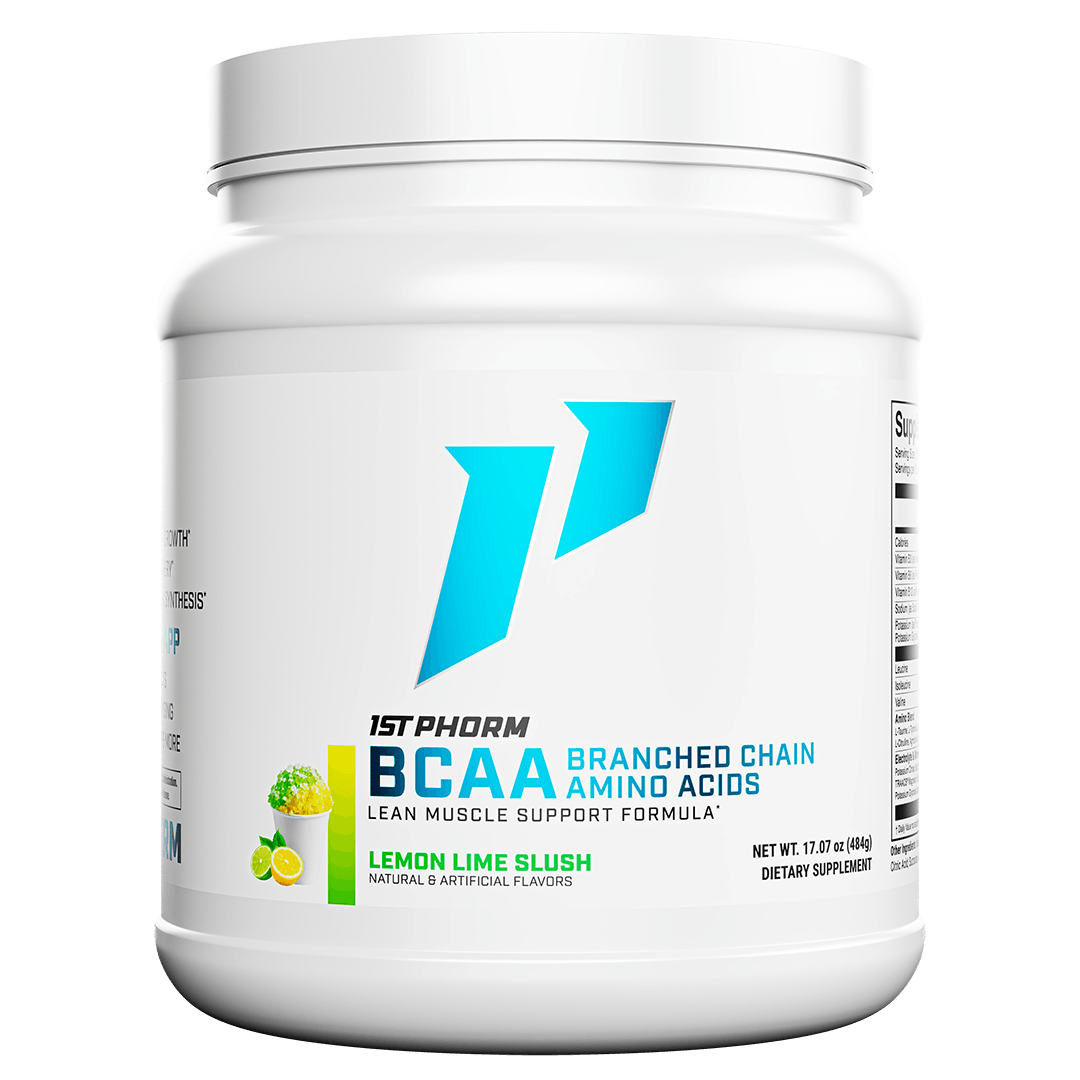
If you're ready to give BCAAs a try, we have an exceptional formula here at 1st Phorm. Our BCAAs are available in a handful of delicious flavors and come in the optimal research-backed 2:1:1 amino acid ratio.
Now, I know we covered a lot today about when to take BCAAs. So if you have any questions or need any help figuring out the best approach for your goals, don't hesitate to reach out to us.
We have a full team of NASM Certified Personal Trainers and Nutrition Coaches right here in St. Louis, Missouri. Just give us a call at 1-800-409-9732 or send us an email at [email protected]. We're available Monday through Friday from 6 AM to 8 PM Central and Saturday & Sunday from 9 AM to 7 PM Central.
We'll be more than happy to help you out in any way we can!

Frequently Asked Questions
When Is the Best Time To Take BCAAs?
The best time to take BCAAs is when they serve a specific purpose in your training and nutrition plan. This can look different depending on your schedule, plan, and goals. Many people choose to take BCAAs before, during, and after training to help support lean muscle. However, BCAAs can be taken at any time throughout the day.
Should I Take BCAAs Before or After a Workout?
It's entirely up to you whether you take BCAAs before or after a workout. Both times can be beneficial.
Can I Take BCAAs on an Empty Stomach?
Yes, you absolutely can! BCAAs are safe to take fasted. Many people report taking BCAAs before they're fasted workouts to help prevent excessive muscle breakdown.
Are BCAAs Better Than Whey Protein?
No. Whey protein gives you a complete amino acid profile, including all the BCAAs, while BCAA supplements only provide three of the nine essential amino acids. If you're short on protein for the day, whey is the better option. Just remember they're different tools and shouldn't be seen as substitutes.
How Much BCAAs Should I Take and When?
Most studies suggest taking 5-10 grams of BCAAs per serving. When you take them is still entirely up to you, your goals, and your individual preferences.
Do BCAAs Give You Energy?
Not like caffeine. They don't stimulate your nervous system, but they may help reduce fatigue and muscle breakdown during training.
Can I Mix BCAAs With Other Supplements?
Absolutely. Many people mix BCAAs with creatine, pre-workout, or electrolytes for even more support. Just make sure you're not doubling up on amino acids if you're also taking a complete protein powder. Not because it would be a bad thing, but because it wouldn't be necessary.
Can I Take BCAAs Every Day?
Yes, BCAAs are safe for daily use. The key is understanding when to take BCAAs based on your daily routine and training schedule. On non-training days, you might use them between meals or during fasting periods.
How Long Before a Workout Should I Take BCAAs?
If you plan to take BCAAs before a workout, a 15-30 minute lead time is what I'd recommend. This gives your body time to absorb the amino acids and have them available when you start training.
References:
(1) Wolfe RR. Branched-chain amino acids and muscle protein synthesis in humans: myth or reality? J Int Soc Sports Nutr. 2017;14:30.
(2) Shimomura Y, et al. Branched-chain amino acid supplementation before squat exercise and delayed-onset muscle soreness. Int J Sport Nutr Exerc Metab. 2010;20(3):236-244.
(3) Jackman SR, et al. Branched-chain amino acid ingestion stimulates muscle myofibrillar protein synthesis following resistance exercise in humans. Front Physiol. 2017;8:390.
(4) Spillane M, et al. The effects of 8 weeks of BCAA supplementation on body composition and performance measures. J Int Soc Sports Nutr. 2012;9:20.