Hyaluronic acid supplements are hailed as “moisture magnets” that you can swallow. That reputation is undeniable for topical skincare.
But what about taking it orally? I’m seeing more and more that emerging supplements include hyaluronic acid as an ingredient for skin and joint support.
From my POV as a registered dietitian, I’ll cover what hyaluronic acid is, what the studies show, how much to take, and how it fits with collagen, since many of my clients already take collagen for skin support.
Key Takeaways
- Hyaluronic acid is a molecule found naturally in your skin and joints. It binds to moisture.
- Oral hyaluronic acid supplementation may help support skin hydration and elasticity, along with joint comfort.*
- Hyaluronic acid and collagen are complementary. They play different roles, so many people use them together.
- Always follow the instructions on the label. If you’re pregnant, breastfeeding, or managing health conditions, check with your provider.
As always, consult with your healthcare provider before starting any new supplement or nutrition program, especially if you are pregnant, nursing, taking medication, or have a medical condition.
What’s In This Guide:
- What Is Hyaluronic Acid?
- What Do Hyaluronic Acid Supplements Do?
- Does Oral Hyaluronic Acid Actually Work?
- Hyaluronic Acid and Collagen Together
- How to Take Hyaluronic Acid
- Before You Start: Safety & Considerations
- What Is Hyaluronic Acid?
Hyaluronic acid (HA) is a molecule naturally found in your skin and joints. It binds water and helps tissues stay hydrated and joints stay lubricated.
Hyaluronic acid for skin
About half of your body’s hyaluronic acid sits in your skin. It lives in the dermis and pulls in water. That’s what makes skin plump and springy when it’s healthy.
As you age, you make less of it naturally. You might notice that your skin tends to get drier and thinner in texture.
Hyaluronic acid for joints
In your joints, hyaluronic acid is a main component of synovial fluid. And synovial fluid is the slippery cushion between your bones.
Hyaluronic acid gives that fluid its thickness and shock-absorbing features. So when joint hyaluronic acid thins out, movement can feel less comfortable overall.
What Do Hyaluronic Acid Supplements Do?
Hyaluronic acid supplements are used to support skin hydration and elasticity and to support everyday joint comfort.*
One caveat worth knowing up front: most joint research to date has been done in people with knee osteoarthritis, so that's where the findings are strongest. HA is not a treatment for any condition, and this article isn't about treating one.
Skin hydration and elasticity
The body of evidence supporting skin hydration and elasticity claims around hyaluronic acid benefits is fairly strong.
A 12-week randomized controlled trial in adults aged 35-64 found that 120 mg a day of oral HA improved wrinkle scores, skin moisture, and elasticity.
Of course, there are other supplements that can support skin health, too. If skin health is top of mind, head over to 1st Phorm’s guide to skin-supporting nutrients.
Joint comfort and lubrication
Most of the research for HA on joints is on people with existing knee conditions. This review showed that oral HA improved knee pain and stiffness across several studies.
However, these results are on people who are actively managing joint discomfort, so it’s not necessarily fair to say that HA fixes any medical problems. Rather, it can help provide everyday comfort.
That’s exactly where a supplement like Joint Mobility can provide everyday joint support. It pairs HA with Cissus and ParActin to support joint comfort and mobility.* If joint health is a focus for you, consider reading up on supplements for joint comfort.
|
For skin |
For joints |
|
Supports skin hydration |
A building block of synovial fluid |
|
Supports skin elasticity |
Supports joint comfort and lubrication |
|
Studied for reduced wrinkle depth |
Studied mostly in people with knee discomfort |
Does Oral Hyaluronic Acid Actually Work?
Several studies do seem to support HA’s role in skin hydration, but more research is needed, and results vary from person to person.
The absorption question
It’s the elephant in the room… does it absorb? Hyaluronic acid is a big molecule, and your gut doesn’t absorb it whole as it would with food, for example.
Instead, your gut bacteria and enzymes break it down into smaller bits, and that portion crosses into your bloodstream.
So, you do get that absorption and the benefits indirectly, but this is why some researchers are skeptical about oral hyaluronic acid. More research is definitely needed in this area.
What human studies suggest
Human trials are more encouraging than the absorption question alone would suggest.
A randomized trial in 129 women found oral HA supported skin hydration within 2–8 weeks, across both younger and older participants.
The leading theory here is that these fragments in the bloodstream can signal to your own cells to hold water and make HA, rather than directly supporting skin. Individual results may still vary though.
Hyaluronic Acid and Collagen Together
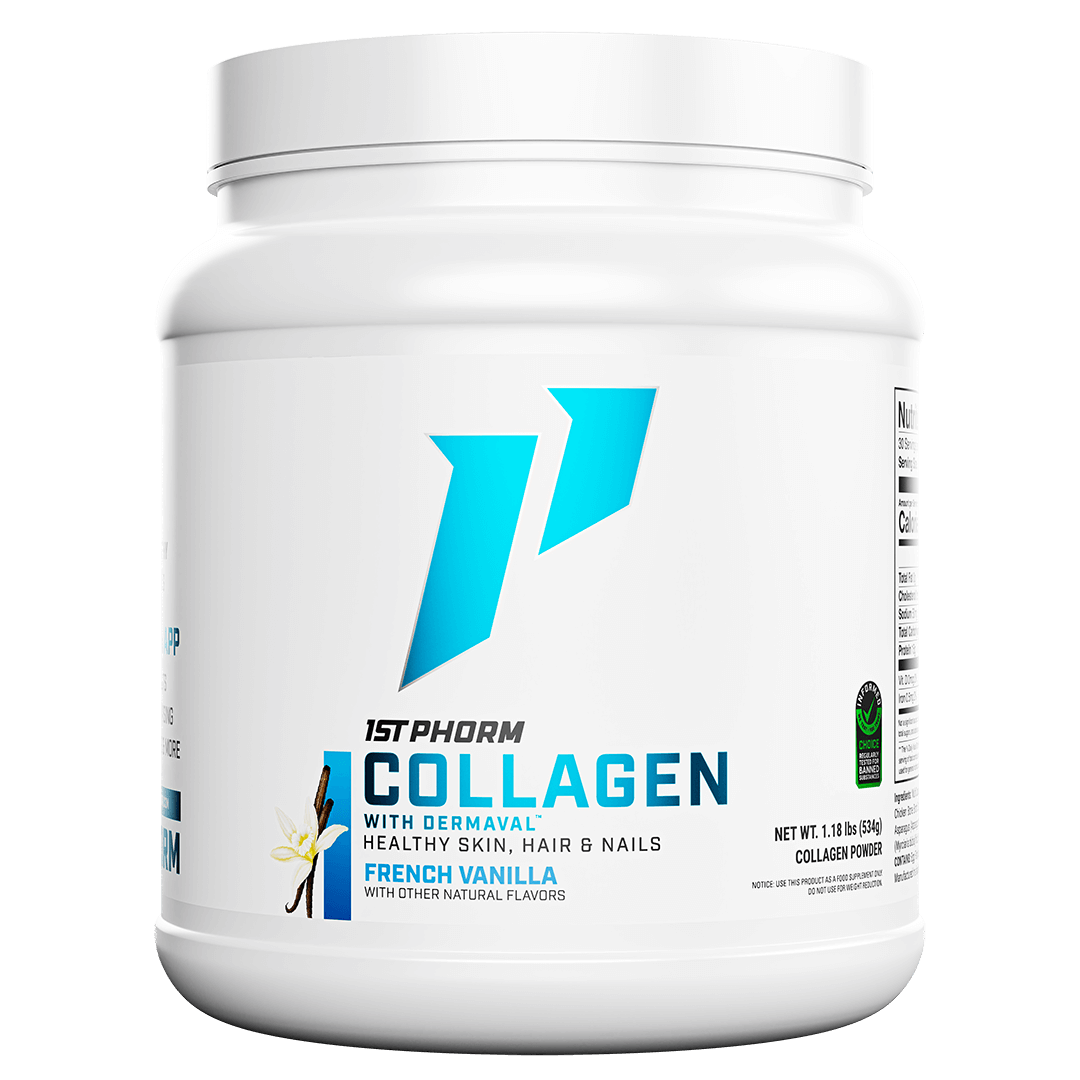
Hyaluronic acid and collagen can play complementary roles: while collagen provides structure, hyaluronic acid supports hydration.
Complementary roles
Imagine your skin’s support structure is like a wall. Collagen is a type of protein that provides the structural framework, like bricks. HA is the mortar and moisture all around them.
As you can see, they have different jobs and can play together well, which is why people often pair them.
Using them together
In theory, stacking these ingredients together is quite common and reasonable, given their roles. However, there’s not strong evidence for this “better together” on paper.
This study tested collagen + vitamin C, with and without hyaluronic acid. Both formulas improved dermis density, texture, and wrinkle severity, but neither significantly changed hydration or elasticity. Adding HA gave no measurable benefit over collagen alone.
No single ingredient or combo is magic, although there are reasons and studies behind why people are excited about what collagen is good for. Steady use over a longer period matters most.
How to Take Hyaluronic Acid
Follow the instructions on your product label. Oral hyaluronic acid is commonly taken once daily. Taking consistently over several weeks is what matters most.
Forms (sodium hyaluronate)
Most oral forms are sold as sodium hyaluronate, which is its salt form.
It’s chemically the same as hyaluronic acid. It’s at your body’s pH level and absorbs a little more readily, so don’t let the name throw you off.
Dosing and consistency
Human studies mostly cite 80-200 mg a day. Follow the directions on the label rather than eyeballing it, and give it some time.
Skin studies seem to cite 8-12 weeks before results showed up, so it’s tough to tell after just a few days. Steady daily use matters more than just one big dose.
Before You Start: Safety & Considerations
Most people can take hyaluronic acid without issue, but some conditions may warrant a doc visit before you start.
Tolerability
For most healthy adults, daily use should be pretty low risk.
Side effects are generally rare and usually mild, but in some people, minor digestive upset can occur. It’s not a stimulant, and it shouldn’t interact with much.
Who should consult a provider
Of course, no supplement is entirely “safe” and depends on your individual needs and conditions.
Talk to your healthcare provider if any of these apply to you:
- Pregnant
- Breastfeeding
- Taking medications
- Managing a health condition
Frequently Asked Questions
What do hyaluronic acid supplements do?
Oral hyaluronic acid supplements can support skin hydration and elasticity and support everyday joint comfort. Human research is most consistent for skin hydration, with results for other outcomes more variable.
Does oral hyaluronic acid really work?
Most likely. Your gut breaks down hyaluronic acid into fragments for absorption into the bloodstream. However, results can vary, and most joint research is on people with knee discomfort.
Is hyaluronic acid good for joints?
Hyaluronic acid may support everyday joint comfort. It's a natural building block of synovial fluid, and most human research has studied people with knee discomfort. It isn't a treatment for any joint condition.
Can you take hyaluronic acid and collagen together?
Yes, the two ingredients are complementary, since collagen provides structure and hyaluronic acid supports hydration. Many people take them together as a stack or in a product that has both.
How long does it take for hyaluronic acid supplements to work?
Give it at least 8-12 weeks. Daily consistency is what matters the most, but if you don't see visible results in a couple of months, it may not be the right fit for you.
Is hyaluronic acid safe to take daily?
Yes, hyaluronic acid is generally well tolerated for daily use for most healthy adults. But if you’re pregnant, nursing, taking medications, or have a health condition, check with a provider.
Conclusion
So, do HA supplements work? Yes, they can, but results vary. Oral forms can support skin hydration and elasticity and everyday joint comfort. But studies on absorption spark a lot of debate, and of course, results vary by the individual.
You could also consider pairing it with collagen or other supportive ingredients to cover off on both structure + moisture for your skin and joints. For example, this joint supplement pairs hyaluronic acid (with Cissus Quadrangularis and ParActin) for everyday joint support.
Or, if you want to explore other options that comprehensively address skin and joint health, browse 1st Phorm collagen & joint support to find support around your goals.
Have any questions in the meantime? Please don't hesitate to reach out. We have a full team of NASM Certified Personal Trainers and Nutrition Coaches right here in St. Louis, Missouri.
Just give us a call at 1-800-409-9732 or send us an email at [email protected]. We're available Monday through Friday from 6 AM to 8 PM Central and Saturday & Sunday from 9 AM to 7 PM Central.
We’re happy to help in any way we can to support your training goals!
*These statements have not been evaluated by the Food and Drug Administration. This product is not intended to diagnose, treat, cure, or prevent any disease.