Pre-workout for beginners often goes like this: it’s before 6:00 a.m., you’re standing in the kitchen with a tub someone recommended, and you’re wondering, “Do I actually take a whole scoop of this…?”
As a dietitian and a once pre-workout newbie, here’s the first thing I’d tell you: start with about half the recommended serving. It’s the simplest way to see how your body responds before jumping into a full serving.
I’ve learned a few things (including that the beta-alanine tingles are much less alarming once you know what’s causing them), and I’ll walk you through everything I wish someone had told me before my first pre-workout experience or two.
Key Takeaways
- Start with half of a serving the first time to see how your body responds before working up to a full dose.
- The tingling feeling in your face and hands is from beta-alanine, and it is harmless and temporary, even if it is surprising the first time.
- Take pre-workout about 30 minutes before training so the caffeine has time to take effect.
- A serving of pre-workout often contains as much caffeine as two to three cups of coffee, so factor that into your day, especially if you train in the evening.
- Pre-workout may help support energy and focus, but consistent training, good nutrition, and quality sleep will always have the biggest impact on your results.
As always, consult with your healthcare provider before starting any new supplement or nutrition program, especially if you are pregnant, nursing, taking medication, or have a medical condition.
In This Article:
- What Is Pre Workout and What Does It Do?
- How Much Pre Workout Should a Beginner Take?
- Why Does Pre Workout Make You Tingle?
- When Should You Take Pre Workout?
- How to Avoid the Jitters
- Do You Even Need Pre Workout as a Beginner?
- What Should a Beginner Look For in a Pre Workout?
- The Final Scoop: Pre-Workout for Beginners
What Is Pre Workout and What Does It Do?
Pre-workout is a supplement you take about 30 minutes before training to help boost energy, focus, and exercise performance. Most formulas are built around caffeine, along with ingredients that support endurance and blood flow.
The Main Ingredients You’ll See
While every brand has its own blend, an analysis of the 100 best-selling pre-workout supplements notes that most pre-workout supplements include some combination of:
- Caffeine helps increase alertness and focus and reduce feelings of fatigue.
- L-citrulline helps increase blood flow to working muscles and may support exercise performance.
- Beta-alanine helps delay muscle fatigue during high-intensity exercise. (It’s also responsible for those harmless pre-workout tingles.)
- L-tyrosine may help support focus during mentally or physically demanding workouts.
- Taurine may support exercise performance and muscle function.
- Creatine helps your muscles produce quick energy during hard efforts like lifting and sprinting and can improve strength and power with regular use.
What It Actually Feels Like
Now that we have a basic understanding of what pre-workout actually is, what does it actually feel like?
While everyone experiences pre-workout a little differently, especially when the formulations differ, you may feel more alert and focused with less fatigue during your workout, as these college-aged males reported.
Personally, I notice it most before early morning workouts (probably because my caffeine tank is still pretty low). About 30 minutes after drinking it, I don’t immediately feel like I could run through a brick wall. It’s more subtle than that. I gradually realize I’m more awake, more focused, and more motivated to get started.
The one effect that can catch first-time users off guard is the tingling sensation caused by beta-alanine. It may show up on your face, hands, or arms, but it’s completely harmless and usually fades within an hour or two.
How Much Pre Workout Should a Beginner Take?
If you’re trying pre-workout for the first time, start with about half the recommended serving. It’s a simple way to see how your body responds before jumping into a full dose, especially if you’re not used to caffeine.
Why Start With Half?
Your first time taking pre-workout is really just an experiment with one variable: how much. Before you measure anything, check what the label considers one serving. Some pre-workouts use two scoops as a full serving, so a half serving would be one scoop.
From there, consider starting with about half of the recommended serving. There’s no hard-and-fast rule that says you have to, but it gives you a chance to see how your body responds before jumping into a full dose.
That’s especially helpful because pre-workout formulas can vary widely. One full serving may contain around 150 milligrams (mg) of caffeine, while another packs 300 milligrams or more. If you’re new to pre-workout, or don’t regularly consume much caffeine, starting conservatively can help you find the amount that feels right for you.
How to Work Up From There
If you feel good with half a serving (like no jitters, upset stomach, or trouble sleeping), gradually increase the amount the next few times you use it.
Think of it as finding your sweet spot. Some people prefer the full serving, while others get the energy and focus they’re after with less. If a smaller amount works well for you, feel free to stick with it.
Check the Caffeine on the Label
Before you mix your pre-workout, flip the container and look for the caffeine content, listed in milligrams. For comparison:
- About 100 mg = roughly one cup of coffee
- 200 mg = about two cups
- 300 mg = about three cups
Thinking about caffeine this way can help you decide whether a product fits your comfort level. If you normally drink one cup of coffee in the morning, a pre-workout with 350 milligrams of caffeine may feel much stronger than you bargained for.
Why Does Pre Workout Make You Tingle?
That tingling in your face, neck, or hands is most likely caused by beta-alanine, an ingredient found in many pre-workout supplements. The sensation, called paresthesia, is harmless, and it usually starts soon after you take it,, and typically fades within 60 to 90 minutes.
What Beta-Alanine Paresthesia Is
Paresthesia refers to the pins-and-needles or prickling sensation some people experience after taking beta-alanine. It happens because beta-alanine activates sensory nerve receptors near the surface of the skin.
The intensity varies from person to person, but it’s generally dose-dependent, meaning higher amounts of beta-alanine are more likely to cause the tingling.
The sensation is most common when taking more than 800 milligrams at one time, particularly in fast-absorbing pre-workout formulas, as noted by the International Society of Sports Nutrition (ISSN).
Is It Dangerous?
While the tingling can feel unusual, or even a little intense, it’s a well-known, temporary side effect of beta-alanine and isn’t considered harmful. (The ISSN supports this.)
That said, if you experience symptoms that go beyond tingling, such as hives, swelling, difficulty breathing, or dizziness, stop using the pre-workout and seek medical attention. Those symptoms aren’t typical of beta-alanine and could indicate a different reaction to the supplement.
How to Reduce It
If you’re not a fan of the sensation, you have a few options:
- Start with a smaller serving of pre-workout.
- Choose a product that contains less beta-alanine.
- Look for pre-workout options without beta-alanine if you don’t want the tingles at all (or even risk it).
The upside is that the tingling is temporary and gets much less startling once you know what's causing it.
When Should You Take Pre Workout?
Take your pre-workout about 30 minutes before you start training. That gives the caffeine enough time to kick in as your workout begins, so you feel the effects during your training and not halfway through it.
The 30 Minute Window
Figuring out when to take it for the best effect is actually pretty straightforward. Most people feel the effects by about 30 minutes, so work backward from when you plan to start exercising.
A simple routine is to finish your pre-workout before you start your warm-up. By the time you’ve loosened up and done a few mobility drills, the caffeine is usually starting to kick in.
With or Without Food
This is one of those questions where your stomach gets the biggest say-so.
Some people can roll out of bed, drink pre-workout, and head straight to the gym. Others may feel shaky, nauseated, or find the caffeine hits too hard on an empty stomach.
If you’re not sure where you fall, start conservatively and see what works for you.
- Training first thing? Try pairing it with something small, like a banana, applesauce pouch, or a slice of toast.
- Already eaten? If you’ve had a meal within the past couple of hours, you’re probably fine taking it on its own.
- Sensitive to caffeine? Even a light snack can help take the edge off.
The Evening Training Dilemma
If you train after work, your pre-workout may still be hanging around long after you’ve left the gym.
How long the effects last depends on the ingredient, but caffeine tends to stick around the longest. With a half-life of about five to six hours, roughly half of the caffeine you consume is still in your system five to six hours later. So if you take your pre-workout at 6:00 p.m., roughly half of the caffeine is still in your system around 11:00 p.m.
That’s no big deal for some pre-workout drinkers. For others (raises hand), it’s the reason they’re staring at the ceiling. If you fall into the latter camp, try a half serving, a lower-caffeine formula, or a stimulant-free option instead.
How to Avoid the Jitters
The jitters usually come down to more stimulants than you comfortably tolerate, caffeine most often, though some formulas contain others too. That's part of why we suggest starting with a half serving of Project-1 Pro, which pairs its caffeine with a small dose of yohimbine. Also, eating a small snack, and paying attention to your total daily caffeine intake is often all it takes to fix the problem.
Four things solve it for most people:
- Start with about half a serving. You can always take more next time.
- Eat something first. Even a small snack takes the edge off.
- Count your caffeine for the whole day, not just the scoop.
- Consider a caffeine-free option if you train late or you're sensitive to stimulants.
Eat Something First
Taking pre-workout on an empty stomach isn’t a one-way ticket to jitters, but it can make caffeine’s effects feel more intense.
If you’ve noticed jitters, nausea, or feeling “wired,” try a pre-workout snack, such as a banana, toast, or even a handful of cereal. While food won’t cancel out the effects of caffeine, it may help you tolerate it better and reduce stomach discomfort.
Count Your Whole Day’s Caffeine
Pre-workout isn’t always your only source of caffeine. Before adding another scoop, think about everything else you’ve had that day, including:
- Coffee
- Energy drinks
- Tea
- Soda
- Caffeinated electrolyte mixes or energy gels
Sometimes it’s not the pre-workout itself causing the jitters. It’s the combination of everything else you’ve consumed. If an energy drink is part of that math, here’s how pre-workout vs. energy drinks stack up.
Consider a Non-Stim Option
Not everyone needs (or wants) caffeine to have a great workout.
If you exercise in the evening, are especially sensitive to caffeine, or simply don’t enjoy the jitters, there are plenty of well-formulated caffeine-free alternatives with evidence-based ingredients like L-citrulline. It’s also a good option if you already get plenty of caffeine from coffee or other drinks throughout the day.
If you'd rather skip stimulants entirely, Endura-Formance is 1st Phorm's non-caffeinated pre-workout. It’s the same idea, minus the caffeine, which makes it a reasonable pick for evening training.
Do You Even Need Pre Workout as a Beginner?
No. Pre-workout is a convenience and a small performance booster, not a requirement. As a beginner, you’ll make far bigger gains by training consistently, eating enough, and getting adequate sleep than you will from any supplement.
What Matters More
Pre-workout, like any supplement, works best when it’s taken on top of a solid foundation.
If you’re new to training, your body is already primed to make rapid progress simply by exercising consistently. (That’s why beginners often experience what’s known as “newbie gains.”) And if you’re new to pre-workout, the same principle still applies: the basics drive results.
If you’re feeling drained before every workout, take a pause before reaching for another scoop. Ask yourself: Do I really need more caffeine, or do I need more sleep, more food, or a recovery day?
When Pre-Workout Genuinely Works
Once those fundamentals are in place, pre-workout can absolutely earn a spot in your routine.
For me, it’s most helpful before early-morning runs or tougher training sessions, when I want to feel a little more awake and mentally locked in. I take it because it helps me get more out of those workouts.
That’s where pre-workout really shines: giving you a little extra energy and focus on the days you want it, while knowing you can still have a great workout without it.
The Dependency Question
There’s nothing wrong with enjoying pre-workout or using it regularly. The key is remembering what it’s there for: a bit more energy and focus when you want it.
If you start needing larger servings to feel the same boost or feel like you can’t have a good workout without it, consider cutting back and checking in on the basics (food, sleep, hydration, and recovery).
What Should a Beginner Look For in a Pre Workout?
Look for a label that tells you exactly how much of each ingredient you are getting, a caffeine dose you can actually tolerate, and no proprietary blends hiding the amounts.
Transparent Labels
Whether you’re learning how to choose a clean pre-workout or simply looking for the best pre-workout for beginners, I always recommend starting with the same thing: a transparent label that clearly lists every active ingredient and its dose.
A good beginner pre-workout should let you answer a few simple questions in less than a minute:
- How much caffeine am I getting?
- What are the main active ingredients?
- How much of each ingredient is included?
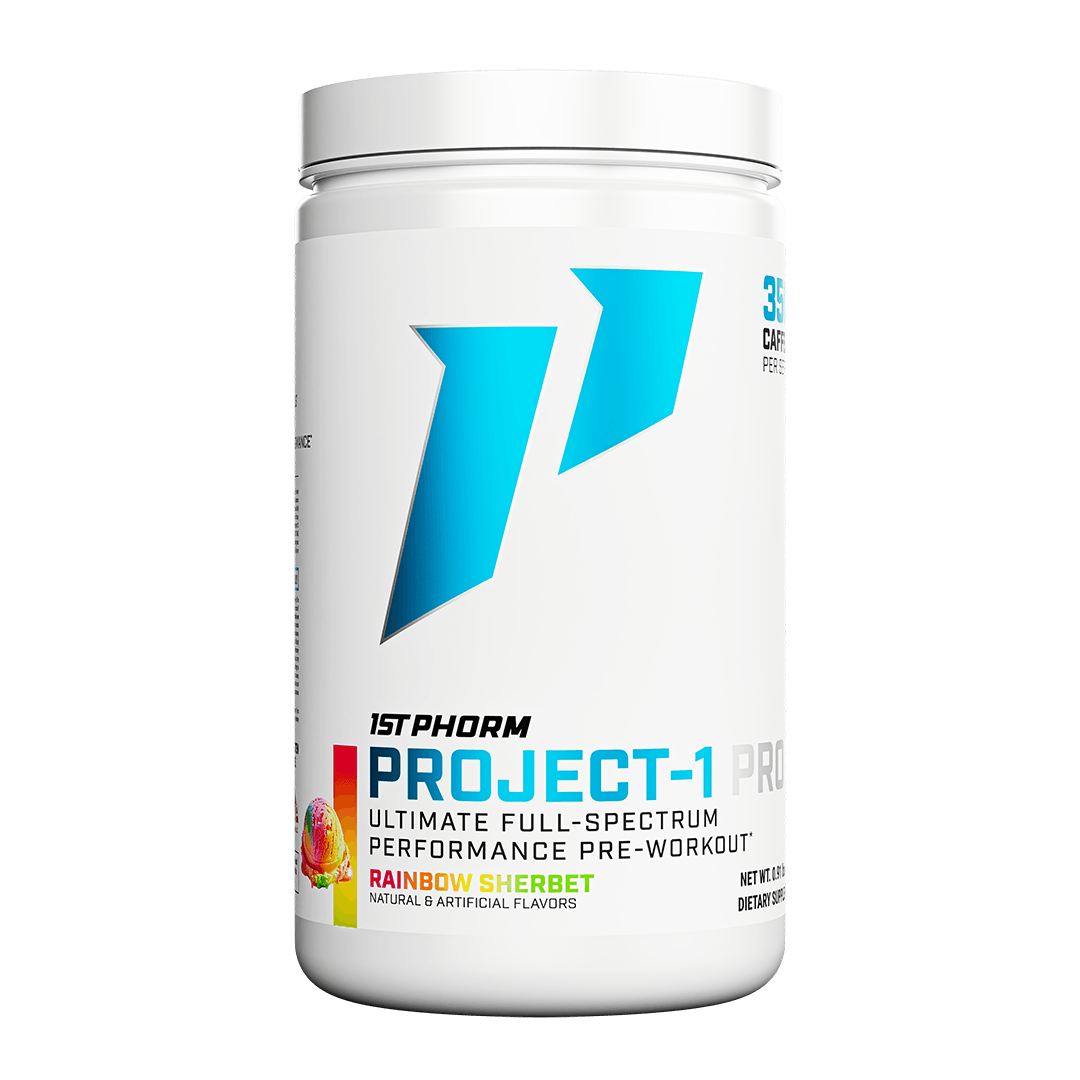
Let’s use Project-1 Pro as an example. It lists every active ingredient and its dose, including 350 milligrams of caffeine anhydrous and 300 milligrams of alpha-GPC (a choline compound studied for focus), so you can see exactly what's in a serving before you decide how much to take. That’s the kind of transparency you want to see on a supplement label.
A Caffeine Dose Right for You
The “right” amount of caffeine is the amount that helps you feel energized and focused without leaving you shaky, anxious, or restless before bed.
That’s why I encourage beginners to pay more attention to the caffeine number than the scoop size. One serving of one pre-workout may contain 150 milligrams of caffeine, while another contains more than double that amount.
Take Project-1 Pro again as an example. One full serving contains 350 milligrams of caffeine anhydrous—a hefty dose if you’re new to pre-workout or don’t consume much caffeine. And to keep with the theme here, that’s another reason I recommend starting with about half a serving and increasing as tolerated.
If you take any medication, or you've been told to keep an eye on your blood pressure or heart rate, check with your healthcare provider before starting a stimulant-based pre-workout.
Also, don’t get too hung up on the type of caffeine just yet, either. You might see names like caffeine anhydrous or dicaffeine malate on the label, but the first thing to look at is the total caffeine content. (If you’re curious about what caffeine anhydrous actually is, that’s covered separately.)
Skip the Proprietary Blends
Imagine ordering a smoothie because you want extra protein after your workout. The menu says it contains protein powder, fruit, peanut butter, and spinach, but doesn’t tell you how much protein is in it. You’d probably wonder, “So… am I getting enough protein for this to matter?”
A proprietary blend works the same way. It isn’t always a bad product, but it does make it harder to know what exactly you’re buying. Of note, one analysis found that 58/100 pre-workout supplements included at least one proprietary blend.
Instead of listing the exact amounts of each ingredient, manufacturers combine them into a single total. That means you know what's in the formula, but not how much.
When you’re comparing pre-workouts, that missing information matters. You can’t tell whether you’re getting an effective amount of ingredients, or just enough for the ingredient to be on the label. That’s why I recommend choosing products that disclose their active ingredients and their doses.
The Final Scoop: Pre-Workout for Beginners
Start with about half the recommended serving, take it 30 minutes or so before your workout, and don’t be startled by the beta-alanine tingles.
After your first pre-workout experience or two, gradually increase your serving as tolerated. Pay attention to your energy, your stomach, and even your sleep that night (they’ll tell you more than the scoop size will).
And remember, enough food, good sleep, and consistent training will always do the heavy lifting. Pre-workout can give you an extra bump in energy and focus, but it doesn’t need to (or shouldn’t) always carry the workout.
If you’re ready to give one a try, browse our pre-workout lineup to find one that fits your training or caffeine dosage.
If you have any questions in the meantime, don't hesitate to reach out. We have a full team of NASM Certified Personal Trainers and Nutrition Coaches right here in St. Louis, Missouri.
Just give us a call at 1-800-409-9732 or send us an email at [email protected]. We're available Monday through Friday from 6 AM to 8 PM Central and Saturday & Sunday from 9 AM to 7 PM Central.
We'll be more than happy to help in any way we can!
FAQs
Can beginners take pre workout?
Yes, most healthy adults new to pre-workout can take it. If it’s your first time, especially with a caffeinated formula, start with about half the recommended serving to see how you respond. If that feels good, you can gradually increase as needed.
Is the tingling from pre workout bad for you?
No. The tingling is usually caused by beta-alanine, a common pre-workout ingredient. It’s harmless and typically fades within 60 to 90 minutes.
How long does pre workout last?
The effects of pre-workout typically last about 1 to 2 hours, though this varies by formula and individual. Caffeine generally stays in the body the longest, with a half-life of about 5 to 6 hours, so it can affect sleep after its noticeable effects wear off.
Can you take pre workout every day?
For most healthy adults, using pre-workout regularly can be safe when taken as directed, but it depends on the formula. Pay particular attention to your total caffeine intake, since regular use can build tolerance and caffeine can interfere with sleep. If you start needing larger servings or having difficulty sleeping, consider cutting back or using a stimulant-free option.
What happens if you take too much pre workout?
Taking too much can leave you feeling jittery, anxious, nauseated, or make your heart race, especially if the product is high in caffeine. If you accidentally take too much and develop severe symptoms like chest pain, difficulty breathing, or an irregular heartbeat, seek medical attention right away.
*These statements have not been evaluated by the Food and Drug Administration. This product is not intended to diagnose, treat, cure, or prevent any disease.