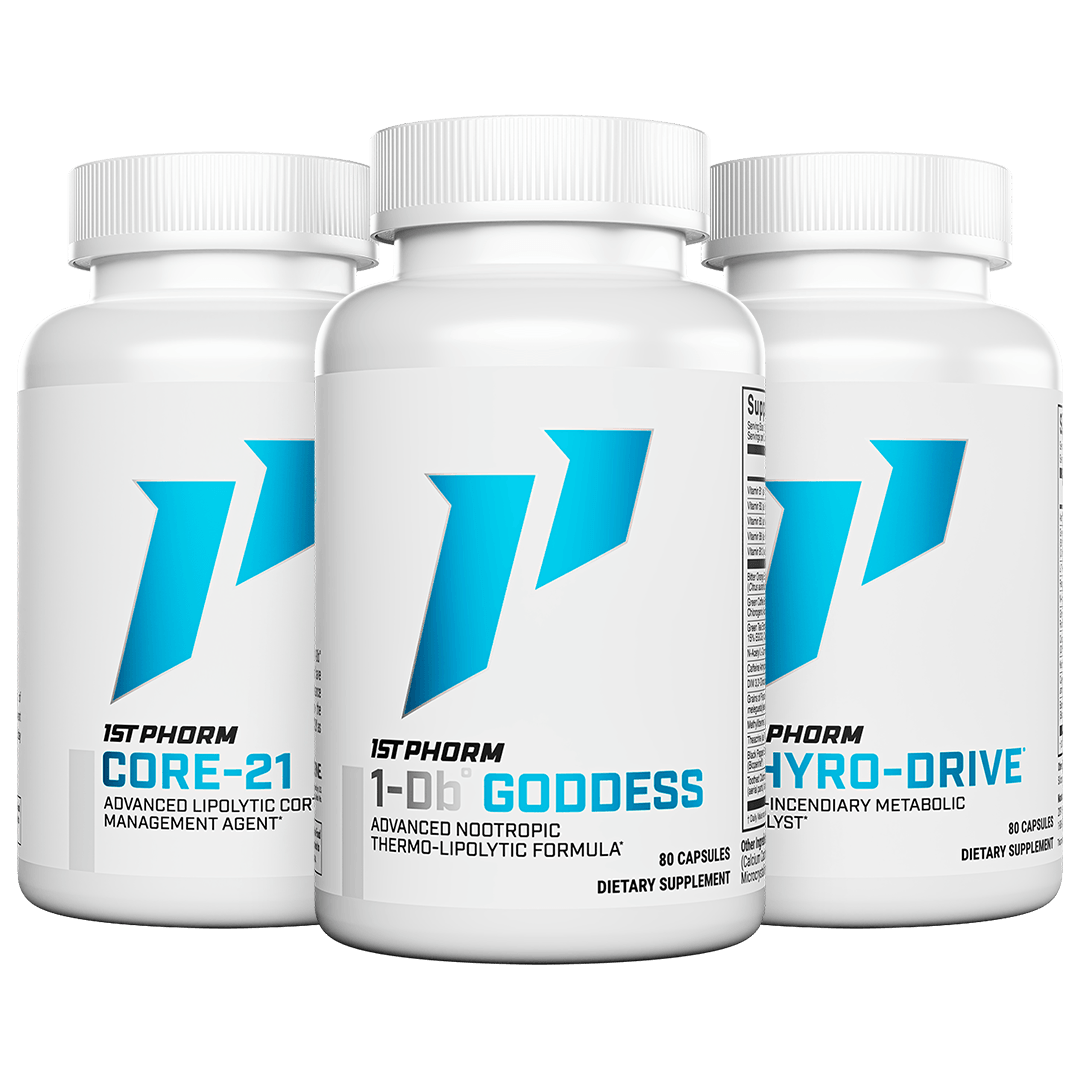
Do fat burners work? Sort of, but not the way some labels imply. Stroll into any supplement store, and you’ll find shelves stocked with products promising to do the hard part for you, and the natural question is whether any of it is real. The short version: a handful of ingredients have legitimate research behind them, the effects are small, and none of them cause fat loss on their own.
Having spent years in this industry and coached people through fat loss phases, I'll be the first to tell you that nothing replaces a proper nutrition and training plan. In fact, if you think a supplement is the answer to your fat-burning efforts, you’re bound to be disappointed.
The reality is that some ingredients have legitimate research supporting their efficacy, but none directly cause fat loss on their own. Instead, the best evidence suggests they may provide modest support by increasing energy, reducing appetite, or slightly boosting calorie expenditure.
In this article, I’ll separate the marketing fluff from the science so you understand which ingredients can actually make a difference in your quest to trim some extra fat off your frame. Plus, I’ll outline realistic expectations and address some common safety concerns so you can choose the right fat burner with confidence.
Key Takeaways
- Fat burners do not cause fat loss on their own. No supplement overrides a calorie surplus, and any honest answer about their efficacy starts there.
- Rather than burning fat directly, the better-supported ingredients work by making a calorie deficit easier to sustain, mainly through appetite support and energy.
- Where research shows an effect, the magnitude is small. Expect modest changes, not complete transformations.
- Because caffeine tolerance builds, the noticeable effects of most fat burners fade over time.
- A fat burner may help at the margins if your nutrition and training are already consistent. However, it cannot replace either.
As always, consult with your healthcare provider before starting any new supplement or nutrition program, especially if you are pregnant, nursing, taking medication, or have a medical condition.
Table of Contents
- Do Fat Burners Actually Work?
- What Fat Burners Actually Do
- Which Fat Burner Ingredients Have Real Evidence?
- Which Fat Burner Ingredients Are Oversold?
- Why the Effect Fades
- What Should You Realistically Expect?
- Are Fat Burners Safe?
- The Bottom Line on Fat Burners
Do Fat Burners Actually Work?
While fat burners can help modestly, they do not cause fat loss on their own. The research on the better-supported ingredients points to small effects that only matter when nutrition and training are already in place.
The short answer
As a certified personal trainer and longtime athlete who underwent a pretty drastic transformation just a few years ago, I have to pour cold water on the idea that a supplement will dramatically accelerate your fat loss. In fact, if you think taking a pill will make up for poor eating habits, an inconsistent training schedule, or lackluster sleep hygiene, you’re bound for a major letdown.
To put it bluntly: fat burners only provide a modest boost. Ultimately, though, you need to be in a calorie deficit and incorporate both strength and cardio training to lose body fat.
What 'work' actually means here
Defining the term “work” is essential for setting realistic expectations.
While some supplements provide tangible benefits, that’s not exactly the case with fat burners. Instead, the better-supported ingredients (more on that in a bit) may help you:
- Feel less hungry between meals*
- Maintain energy while dieting
- Slightly increase daily calorie expenditure
- Improve workout performance when calories are lower
In short, none of those replace the actual calorie deficit. They may, however, make it a little easier to maintain one over the long haul.
What Fat Burners Actually Do
Contrary to popular belief, fat burners do not burn fat directly. Instead, certain research-backed ingredients can support staying in a calorie deficit, mainly by helping with appetite and energy.
The deficit is the mechanism
Regardless of which supplements you take, fat loss occurs when your body consistently uses more energy than it receives from food.
It’s easy to overcomplicate things, but sometimes the answer is really that simple. The mechanism for fat loss boils down to being in a calorie deficit. However, fat burners can provide a small assist.
Appetite support
One of the biggest challenges during a fat-loss phase is overcoming the hunger hurdle. After all, cutting back your caloric intake isn’t particularly fun or easy, especially if you’re embarking on this type of journey for the first time.
Certain ingredients, particularly caffeine, may temporarily suppress appetite in some people. That’s actually one of the reasons people who follow intermittent fasting (me included!) rely on coffee and tea to help blunt some of those hunger signals.
That can make it easier to maintain a calorie deficit, and if you can sustain that over weeks and months, you'll be well positioned to achieve your fat-loss goals.
Energy when calories are low
Anyone who’s dieted for even a week or two knows that your energy levels typically drop as your calories decrease.
That can make it physically and mentally challenging to maintain your performance in the gym, or even get through the grind of the workday. With less fuel in the tank, something like caffeine (a common fat-burner ingredient) can provide a much-needed lift.
Thermogenesis, honestly
Let’s put on our science hat and shed some light on how thermogenics work.
Thermogenesis is the process by which your body produces heat, leading many people to assume it also substantially increases the number of calories you burn. However, the physiological effect is much smaller than supplement marketing often suggests.
The best-supported thermogenic ingredients (typically caffeine and combinations of caffeine with green tea catechins) increase daily energy expenditure by roughly 4-5%. That translates to only about 100 calories per day. (1)
Can that help you maintain a calorie deficit? Compounded over time, it certainly doesn’t hurt. But the magnitude is modest, making thermogenesis just a small part of the fat-loss equation.
If you're curious about whether metabolism boosters live up to the claims, we've taken a deeper look at what they are, how they work, and what the research actually says.
Which Fat Burner Ingredients Have Real Evidence?
Caffeine has the strongest evidence, green tea catechins have modest support, and most other popular fat burner ingredients have far less behind them than their marketing suggests.
|
Ingredient |
Proposed mechanism |
Evidence strength |
|
Caffeine |
CNS stimulation; small rise in energy expenditure |
Strongest in the category; effect small and fades with tolerance |
|
Green tea catechins (EGCG) |
May prolong norepinephrine signaling |
Modest; pooled weight-loss effect very small and not statistically significant |
|
CLA |
Proposed effects on fat oxidation and storage |
Mixed in humans; small effect on body fat |
|
L-carnitine |
Transports fatty acids into mitochondria |
Small measurable effect, mainly in adults who are overweight or obese |
|
Capsaicin |
TRPV1 activation; short-term thermogenesis |
Small but statistically significant |
|
Raspberry ketones |
Animal data on fat metabolism |
Little convincing human evidence |
|
Garcinia cambogia (HCA) |
Appetite and fat-synthesis effects |
Small effect; clinical relevance uncertain |
Let’s explore how each ingredient works and what the science says about its impact.
Caffeine
By far the most consistently effective ingredient found in fat burners, caffeine primarily works by stimulating the central nervous system, increasing alertness, and slightly raising energy expenditure through thermogenesis (1). It may also improve exercise performance and reduce perceived exertion (2).
Research suggests a single 100 mg dose of caffeine can increase resting metabolic rate by roughly 3–4% for a couple of hours. In the same study published in the American Journal of Clinical Nutrition, repeated 100 mg doses spread across a 12-hour day produced a net increase in daily energy expenditure of about 150 calories in lean participants and 79 calories in participants who had previously been obese (3). The exact amount depends on several factors, including dose, body size, and habitual caffeine intake.
In practice, caffeine's greatest value for fat loss may not be the calories it burns directly, but its ability to increase energy and support adherence to a consistent training routine and calorie deficit.
Green tea catechins (EGCG)
Green tea extract is often included in fat burners because it contains catechins, particularly epigallocatechin gallate (EGCG), which may work alongside caffeine to modestly increase energy expenditure and fat oxidation. Researchers believe EGCG inhibits the enzyme that breaks down norepinephrine, allowing this fat-burning hormone to remain active slightly longer (4).
The research on green tea and fat loss is promising, but again, it’s just a small part of the equation. While EGCG can slightly boost energy metabolism, its impact on weight loss isn’t necessarily as profound as you may have been led to believe. According to a 2012 meta-analysis of six studies, researchers found a mean difference in weight loss of 0.04 kilograms, or less than a tenth of a pound (5). Ultimately, that small amount of weight loss was deemed “not likely to be clinically important.”
CLA
Conjugated linoleic acid (CLA) is a family of naturally occurring isomers of linoleic acid, an omega-6 fat found mainly in dairy and beef. It’s often marketed as a fat-loss supplement because it has been shown to reduce fat in animals. Of course, human studies matter far more, and the results are somewhat mixed.
According to a 2007 meta-analysis, roughly 3.2 grams per day was associated with a modest decrease in body fat (6). However, human clinical data remains mixed, with some studies showing little to no overall change in total body weight or body mass index (BMI).
For a deeper dive on this ingredient, learn more about what CLA does and doesn’t do.
L-carnitine
L-carnitine is frequently promoted as a fat burner because it helps transport fatty acids into mitochondria, where they can be used for energy. While this biological role is well established, it doesn't necessarily mean taking more carnitine causes your body to burn more fat.
A 2020 meta-analysis examining the effects of L-carnitine supplementation on weight loss and body composition found some promising results. Based on the 37 randomized controlled trials, supplementation decreased body weight by a weighted mean difference of 1.2 kilograms (about 2.6 pounds), and fat mass by about 2 kilograms (4.4 pounds). Interestingly, the greatest benefits appeared in overweight or obese adults (7).
L-carnitine is a good example of a supplement whose physiological mechanism makes sense but whose real-world impact is limited for most people. It isn't ineffective, but expectations should remain modest, especially if you're already healthy and consuming enough carnitine through your diet.
Capsaicin
If you like spicy food, you’re probably already familiar with capsaicin. This compound is responsible for the heat in chili peppers, and you’ll often find it in fat burners because it activates your TRPV1 receptors, which increase sympathetic nervous system activity and produce a temporary rise in thermogenesis and fat oxidation.
Like the other ingredients mentioned, capsaicin has a small impact on weight loss. A 2023 meta-analysis of 15 randomized controlled trials involving 762 adults found that capsaicin supplementation produced a statistically significant (but modest) effect on body weight (8). Compared with placebo, participants lost an average of just 0.51 kilograms (1.1 pounds) and reduced waist circumference by about 1.1 centimeters. This suggests capsaicin may offer a small supportive benefit, but not necessarily meaningful fat loss on its own.
Which Fat Burner Ingredients Are Oversold?
Several popular ingredients have impressive-sounding mechanisms and rodent data behind them but little to no human evidence of meaningful fat loss.
As a result, you should proceed with caution and be skeptical of inflated marketing claims.
Raspberry ketones
Raspberry ketones became popular after animal studies suggested they might influence fat metabolism.
The problem? Those findings haven't translated into convincing human research.
Most marketing claims rely far more on laboratory data than meaningful clinical outcomes. Plus, most commercial versions are synthetically lab-made.
Garcinia cambogia
Garcinia cambogia is often marketed as a powerful fat-burning ingredient, but the research doesn't support those claims. Its active compound, hydroxycitric acid (HCA), is thought to reduce appetite by increasing serotonin levels and limit fat production by inhibiting an enzyme involved in converting carbohydrates into fat.
However, large reviews of randomized controlled trials have found that any weight-loss benefit is small and often not clinically meaningful. In fact, the average amount lost is about 2 pounds more than placebo (9).
The 'proprietary blend' problem
One of the biggest issues isn't necessarily the ingredients themselves. It's that many products hide their ingredient doses inside the “proprietary blend” label.
Without knowing how much of each ingredient you're actually getting, it's impossible to determine whether the formula even contains research-backed amounts. That’s exactly why transparent labeling is vital for consumers so they know exactly what they’re putting into their body, and how much of it.
Why rodent data isn't enough
Many ingredients sound impressive because they've produced promising weight-loss results in rodents. But let’s be clear: that doesn’t guarantee anything for humans.
Obvious differences in metabolism, dosing, and physiology mean promising animal research frequently fails to yield meaningful human results. So, just because a supplement or particular ingredient has produced results in rats, mice, or other animals doesn’t mean it deserves a stamp of approval for humans.
If anything, it means more human clinical trials are needed to verify these effects.
Why the Effect Fades
Caffeine tolerance builds within weeks, which is why the noticeable kick of a fat burner in week one is usually gone by week six.
How caffeine tolerance develops
One reason many people swear a fat burner "stopped working" is because caffeine tolerance develops surprisingly quickly. If you’re an avid coffee drinker like me, you probably know this all too well.
Repeated caffeine use causes your nervous system to become less responsive, reducing increases in alertness, appetite suppression, and perceived energy. Within several weeks, the dramatic feeling many people experience initially often becomes much less noticeable.
What this means for cycling
Because of this tolerance issue, some people elect to reduce or temporarily eliminate caffeine to restore their sensitivity. This is something I do from time to time, especially since I take a fairly high-stim pre-workout and drink coffee regularly.
Whether cycling is necessary depends on your overall caffeine consumption and personal goals, but continually increasing your dose to chase the original feeling isn't a good long-term strategy.
What Should You Realistically Expect?
If your nutrition and training are already consistent, a fat burner might make a hard deficit feel slightly more manageable. That’s the realistic ceiling, and it is worth knowing before you spend money on a supplement.
The realistic ceiling
Based on my own journey, I can tell you that nutrition, sleep, resistance training, and your other lifestyle habits have to be in check if you want a lean, strong physique and sharp, focused mind. Your fat-loss efforts boil down to being in a calorie deficit, and taking a fat burner can help make that feel slightly easier.
However, it’ll have a marginal effect compared to those other factors.
What it won't do
While I’ve covered what a fat burner can do, here’s what it won’t do:
- Cancel out overeating (being in a caloric surplus)
- Target belly fat (there’s no such thing as spot-targeting)
- Replace exercise
- Make up for poor sleep hygiene
- Build discipline and willpower
- Produce dramatic transformations without requisite lifestyle changes
Who should skip it entirely
It’s always best to speak to your healthcare provider before adding a new supplement to your stack, especially if you’re pregnant, nursing, or have an existing medical condition. Furthermore, a fat burner probably isn’t necessary if:
- You're new to nutrition and exercise
- You already consume large amounts of caffeine
- You're highly sensitive to stimulants
- You struggle with anxiety or poor sleep
- You simply expect rapid fat loss from a supplement
In my experience, improving your nutrition, prioritizing quality sleep, and training hard will always provide a greater return than any supplement can provide.
Are Fat Burners Safe?
The category has a real history of problematic ingredients, which is why transparent labeling and third-party testing matter more here than in almost any other supplement category.
Why this category needs scrutiny
It’s no secret that fat burners are among the most controversial supplements on the market. After all, many products make big promises yet deliver underwhelming results. Plus, many people want a quick fix rather than taking a step back and examining their overall approach to health and fitness.
The category has also faced legitimate safety concerns over the years. Several weight-loss ingredients once commonly found in fat burners were later restricted or removed from the market after being linked to serious adverse health effects. While reputable manufacturers now formulate products with ingredients that have stronger safety profiles, the category's history is a reminder that not every supplement is created equal.
That's why evaluating the label is just as important as looking at the marketing claims on the front of the bottle.
What to look for on a label
When evaluating a fat burner, look for a product with evidence-backed ingredients, fully disclosed doses, and preferably third-party testing. The last thing you want is a proprietary blend that hides how much of each ingredient you’re actually getting.
Once you know what a good label looks like, how to choose between fat burners boils down to your caffeine tolerance, fitness goals, budget, and lifestyle. Once again, I’ll reinforce that you need to have the fundamentals down first before you turn to a supplement for fat-burning support.
Who should talk to a provider first
Talk with your healthcare provider before starting any fat burner if you're pregnant or nursing, taking any medication, or managing a medical condition, including blood pressure, heart, thyroid, kidney, liver, or mental health conditions. The same applies if you're sensitive to stimulants. Most fat burners are built around caffeine, and many include additional stimulant ingredients, so read the label rather than guessing at what's in it.
However, if you’re locked in with your diet, training, and recovery, the 1st Phorm 24-Hour Weight Loss Stack for Women is a great option that lists every ingredient and dose rather than hiding them in a blend.
The Bottom Line on Fat Burners
As much as we’d all love a supplement that would make any unwanted fat disappear, that’s simply not how it works. The best way to achieve the body composition you desire is to dial in your training, diet, and recovery.
Once you have that in order, then you can turn to a fat burner for an extra (but mild) boost. While the 24-Hour Weight Loss Stack provides several supportive options, a broader look at supplements for women may inspire some other additions to your stack. And if you want to compare formulas against the label criteria above, our fat burner lineup is a place to start.
At the end of the day, though, remember what supplementing actually means. Because without the right foundation, no pill, powder, or capsule will make your fat-loss dreams come true.
If you have any questions in the meantime, don't hesitate to reach out. We have a full team of NASM Certified Personal Trainers and Nutrition Coaches right here in St. Louis, Missouri.
Just give us a call at 1-800-409-9732 or send us an email at [email protected]. We're available Monday through Friday from 6 AM to 8 PM Central and Saturday & Sunday from 9 AM to 7 PM Central.
We'll be more than happy to help in any way we can!
FAQs
Do fat burners work without exercise?
Fat burners may provide modest support without exercise, but meaningful fat loss still depends on maintaining a calorie deficit. Combining regular physical activity with sound nutrition will produce far better results than relying on a supplement alone.
How long does it take to see results from a fat burner?
If a fat burner is going to help, any noticeable benefits typically occur over several weeks alongside a consistent calorie deficit and exercise routine. Don't expect dramatic changes within a few days.
Are fat burners bad for you?
Not inherently, but their safety depends on the ingredients, dosage, and your individual health status. Choose products with transparent labels to avoid questionable formulations.
What is the most effective fat burner ingredient?
Caffeine has the strongest body of evidence, with research showing it can modestly increase energy expenditure, improve exercise performance, and temporarily suppress appetite in some people.
Can you take fat burners long term?
That depends on the formulation, but stimulant-based fat burners often become less effective over time as caffeine tolerance develops. If you plan to use one long term, it's best to follow the manufacturer's directions and discuss it with your healthcare provider if you have any medical concerns.
*These statements have not been evaluated by the Food and Drug Administration. This product is not intended to diagnose, treat, cure, or prevent any disease.
References
- Hursel, R., Viechtbauer, W., Dulloo, A. G., Tremblay, A., Tappy, L., Rumpler, W., & Westerterp-Plantenga, M. S. (2011). The effects of catechin rich teas and caffeine on energy expenditure and fat oxidation: a meta-analysis. Obesity reviews : an official journal of the International Association for the Study of Obesity, 12(7), e573–e581. https://doi.org/10.1111/j.1467-789X.2011.00862.x
- Guest, N. S., VanDusseldorp, T. A., Nelson, M. T., Grgic, J., Schoenfeld, B. J., Jenkins, N. D. M., Arent, S. M., Antonio, J., Stout, J. R., Trexler, E. T., Smith-Ryan, A. E., Goldstein, E. R., Kalman, D. S., & Campbell, B. I. (2021). International society of sports nutrition position stand: caffeine and exercise performance. Journal of the International Society of Sports Nutrition, 18(1), 1. https://doi.org/10.1186/s12970-020-00383-4
- Dulloo, A. G., Geissler, C. A., Horton, T., Collins, A., & Miller, D. S. (1989). Normal caffeine consumption: influence on thermogenesis and daily energy expenditure in lean and postobese human volunteers. The American journal of clinical nutrition, 49(1), 44–50. https://doi.org/10.1093/ajcn/49.1.44
- Dulloo, A. G., Seydoux, J., Girardier, L., Chantre, P., & Vandermander, J. (2000). Green tea and thermogenesis: interactions between catechin-polyphenols, caffeine and sympathetic activity. International Journal of Obesity and Related Metabolic Disorders, 24(2), 252–258. https://doi.org/10.1038/sj.ijo.0801101
- Jurgens, T. M., Whelan, A. M., Killian, L., Doucette, S., Kirk, S., & Foy, E. (2012). Green tea for weight loss and weight maintenance in overweight or obese adults. The Cochrane database of systematic reviews, 12(12), CD008650. https://doi.org/10.1002/14651858.CD008650.pub2
- Whigham, L. D., Watras, A. C., & Schoeller, D. A. (2007). Efficacy of conjugated linoleic acid for reducing fat mass: a meta-analysis in humans. The American journal of clinical nutrition, 85(5), 1203–1211. https://doi.org/10.1093/ajcn/85.5.1203
- Talenezhad, N., Mohammadi, M., Ramezani-Jolfaie, N., Mozaffari-Khosravi, H., & Salehi-Abargouei, A. (2020). Effects of l-carnitine supplementation on weight loss and body composition: A systematic review and meta-analysis of 37 randomized controlled clinical trials with dose-response analysis. Clinical nutrition ESPEN, 37, 9–23. https://doi.org/10.1016/j.clnesp.2020.03.008
- Zhang, W., Zhang, Q., Wang, L., Zhou, Q., Wang, P., Qing, Y., & Sun, C. (2023). The effects of capsaicin intake on weight loss among overweight and obese subjects: A systematic review and meta-analysis of randomised controlled trials. British Journal of Nutrition, 130(9), 1645–1656. https://doi.org/10.1017/S0007114523000697
- Onakpoya, I., Hung, S. K., Perry, R., Wider, B., & Ernst, E. (2011). The use of Garcinia extract (hydroxycitric acid) as a weight loss supplement: A systematic review and meta-analysis of randomised clinical trials. Journal of Obesity, 2011, 509038. https://doi.org/10.1155/2011/509038